
Quick Answer
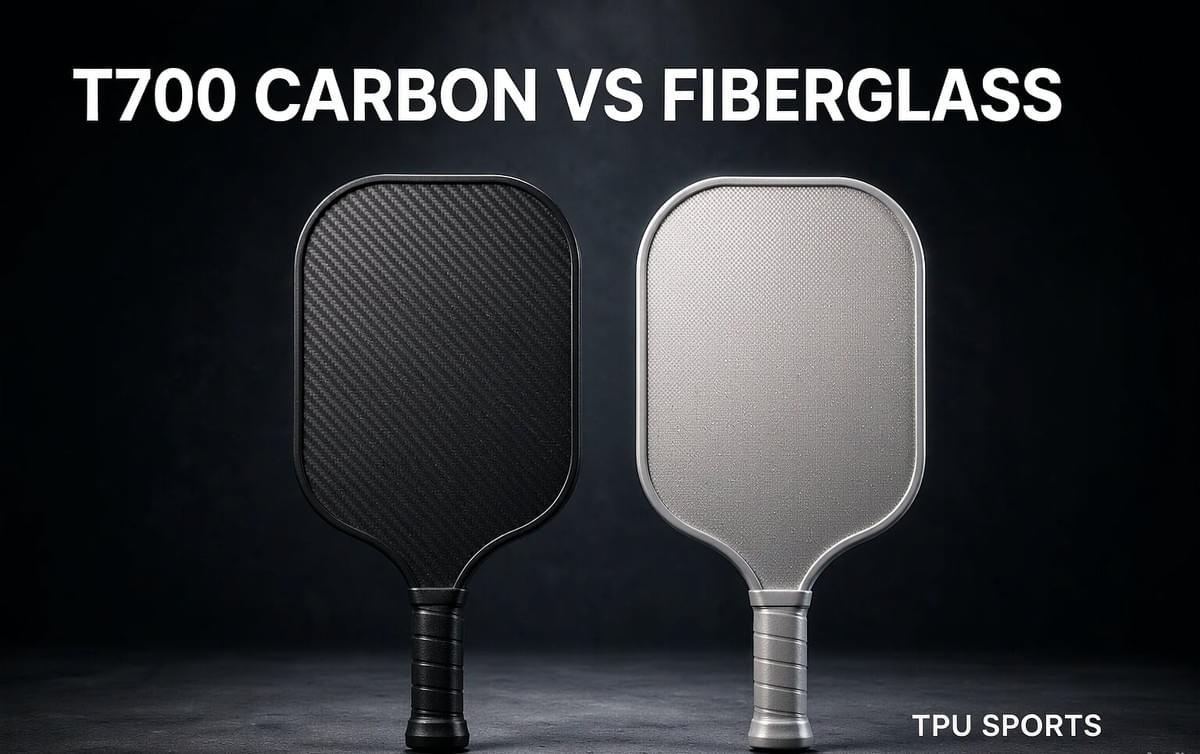
Choose a T700 raw carbon fiber paddle if spin, control and a premium feel matter most — expect to pay more. Choose a fiberglass paddle if you want maximum pop and power per dollar, and you don't mind trading away some spin and touch. For many buyers, a hybrid (carbon + fiberglass) build sits in the middle and covers both needs reasonably well.
This is a face-material decision, not a brand decision — and it is one of the two most common questions we hear from new brand owners building a paddle line (the other being core thickness, which we covered in a separate article).
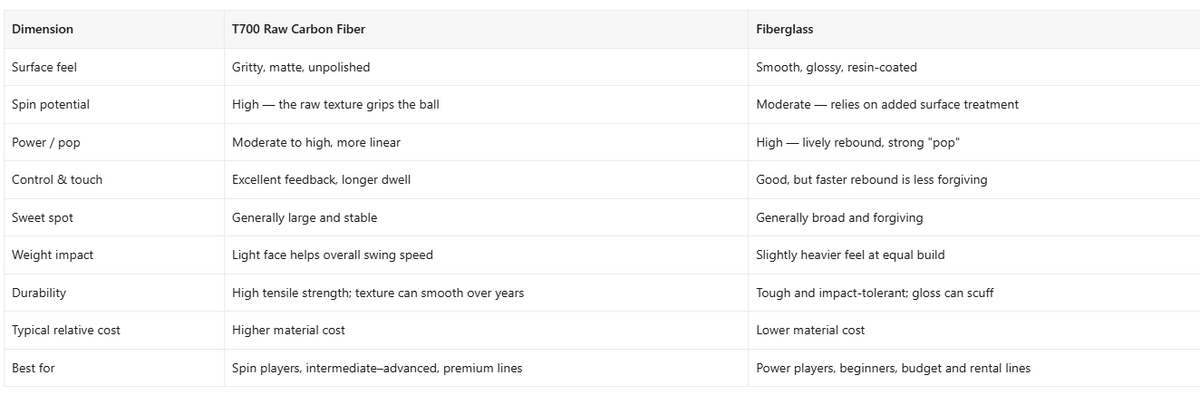
Comparison Table at a Glance
What "T700 Raw Carbon" Actually Means
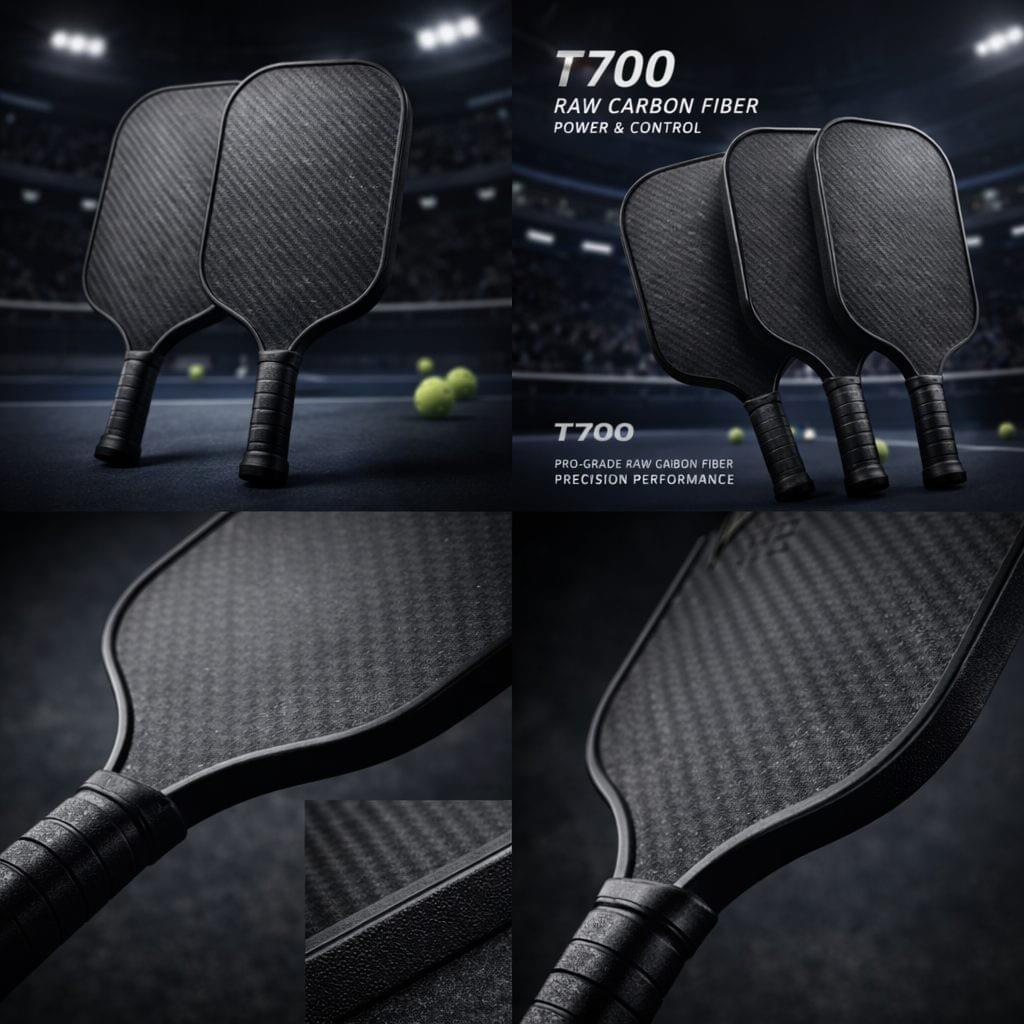
T700 refers to a carbon fiber grade — a standard-modulus, high-tensile-strength fiber that has become the workhorse of performance pickleball paddles. "Raw" means the woven fiber is left exposed, without a painted or coated finish on top.
That unfinished surface is the whole point. A raw carbon face is naturally micro-rough at a scale the ball can feel, so the paddle "grabs" the ball at contact. Players generally get:
- More spin on drives, serves and roll volleys, because friction converts swing speed into rotation.
- Longer dwell time — the ball stays on the face a fraction longer, which helps with resets, dinks and controlled drops.
- A direct, connected feel that stronger players tend to describe as "crisp".
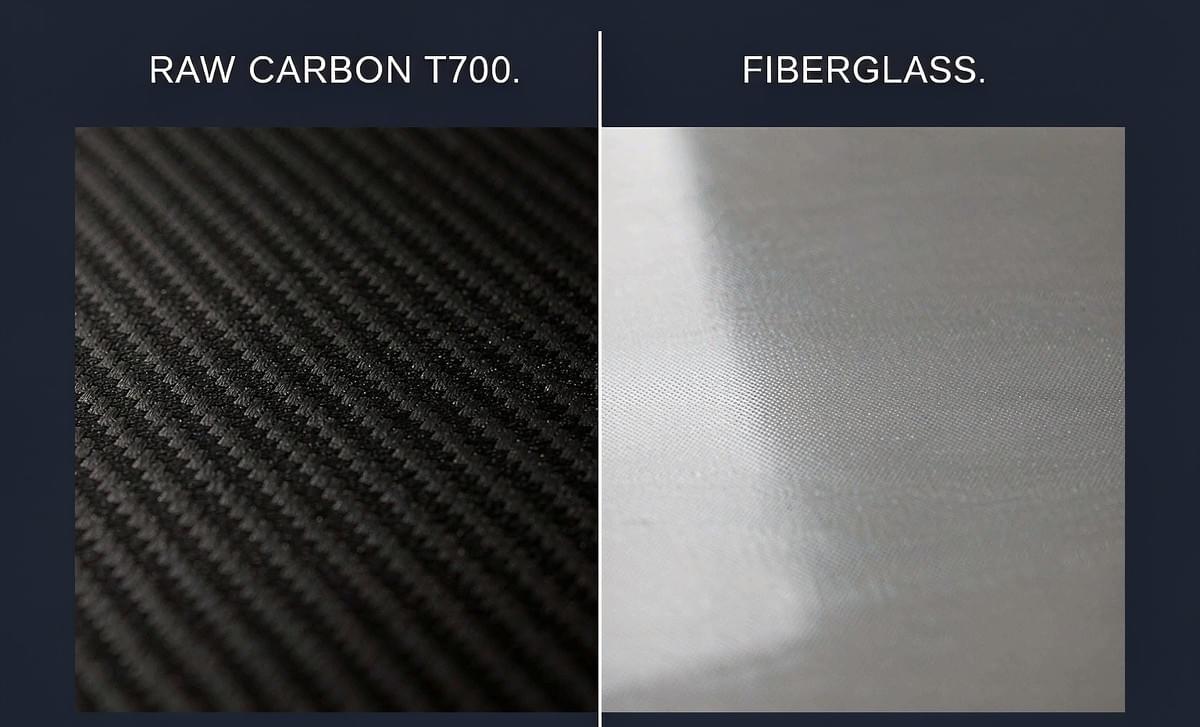
One honest note from the factory floor: raw carbon's grip comes from the resin texture left by manufacturing, not from loose grit sprayed on top. That means it wears more gracefully than spray-on grit coatings — but it is not magic. After a long period of hard play, any surface, raw carbon included, will gradually smooth and lose some bite. No face material escapes physics; some just start further ahead.
What Fiberglass Brings to the Table
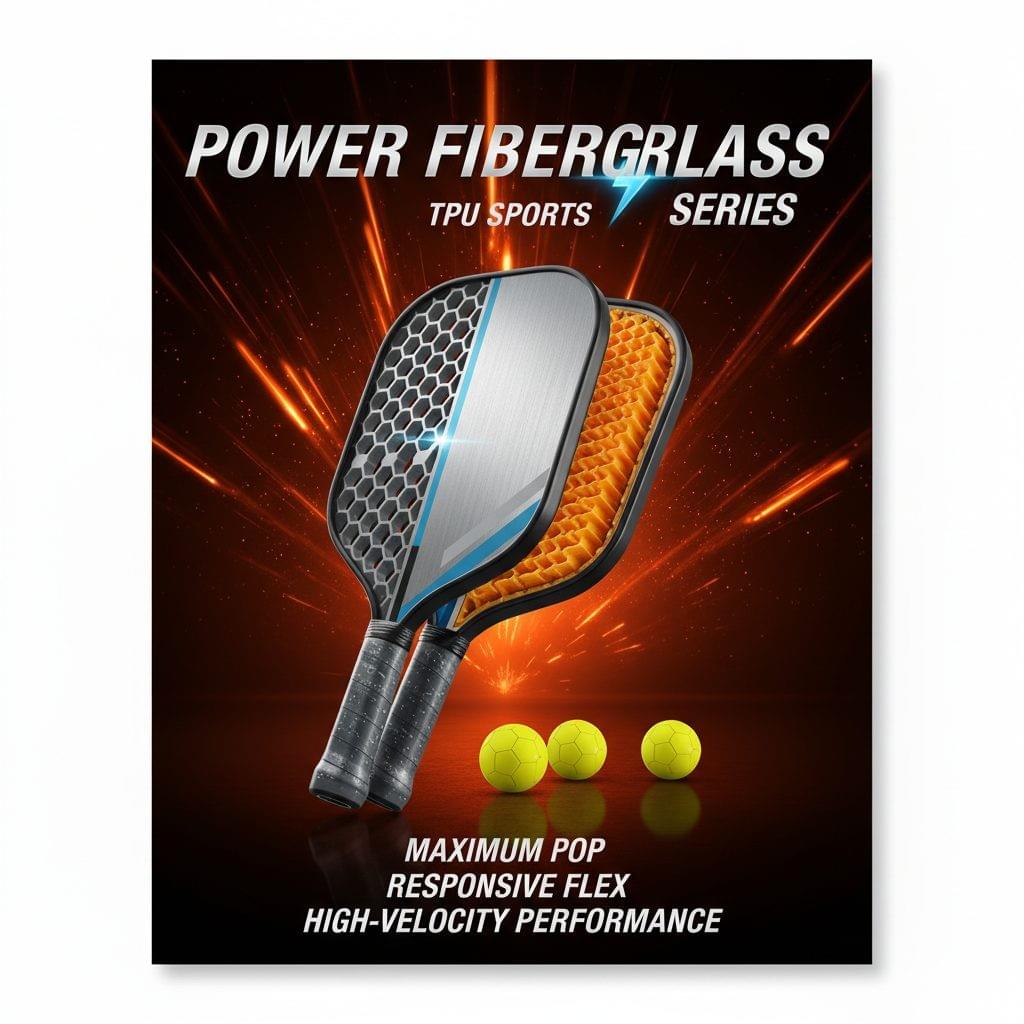
Fiberglass (glass fiber woven cloth under a resin layer) has been used in racket sports far longer than carbon. In paddles it is valued for three things:
- Rebound and pop. Fiberglass stores and returns energy in a springier way than carbon. Ball speed off the face is noticeably easier to generate, especially on drives and overheads.
- Structural stability. Glass fiber reinforces the face against warping, which matters in humid climates and long shipping routes — a real consideration for B2B buyers importing containers.
- Cost efficiency. Fiberglass cloth is considerably cheaper than T700 carbon cloth. That difference flows straight into landed cost, which is why so many entry- and mid-level retail paddles use it.
The trade-off: that same springiness is less predictable on soft shots. Fiberglass faces generally give the ball a quicker, livelier rebound, so touch players have to work a little harder on dinks and drop shots. And a glossy resin finish is naturally smoother than raw carbon, so spin relies more on the resin texture or added surface treatment.
Head-to-Head: The Details That Actually Matter
1. Spin
If spin is the ranking criterion, raw T700 wins, and it is not particularly close. The unpolished texture creates mechanical friction you can feel with a fingertip. Fiberglass can be textured too, but it starts from a smoother baseline. Buyers who position their paddle as a "spin paddle" in a market full of raw-carbon competitors will find fiberglass a hard sell at the performance end.
2. Power
Fiberglass generally produces more easy pop — ball speed with less swing effort. Carbon power exists, but it is more "earned": you load the face and it responds linearly. Players converting from tennis often like the fiberglass response; players from table tennis tend to prefer carbon's precision.
3. Control and Touch
T700 raw carbon generally gives better feedback and dwell time, which makes the soft game more repeatable. This is why most premium control paddles on the market are carbon-faced.
4. Durability
Both are durable in normal use. Carbon has higher tensile strength; fiberglass tolerates impact and flex without brittle failure. In practice, the first thing to fail on a cheap paddle is rarely the face cloth anyway — it is the core, the edge bond or the handle joint. (We covered construction quality in our guide to choosing a paddle.)
5. Weight and Balance
At equal core and shape, a fiberglass build usually comes out slightly heavier or needs thinner cloth to hit the same weight window. For buyers targeting the popular 7.8–8.2 oz retail range, carbon gives the factory a bit more room to maneuver.
6. Cost and Positioning
This is often the deciding factor for brand owners. Fiberglass lets you hit an aggressive retail price point; T700 raw carbon supports a premium story and a premium margin. Many successful brands do both: fiberglass for the entry line, raw carbon for the flagship.
7. Certification
Neither material is inherently "approved" or "not approved" — USA Pickleball certification applies to the complete paddle specification (surface roughness, dimensions, materials list), not to a fabric type. A fiberglass paddle and a raw carbon paddle can both be listed, or both fail, depending on the finished build. Always verify the specific model, not the material name.
Five Misconceptions We Hear From Buyers
- "Raw carbon stays gritty forever." No surface does. Raw carbon starts ahead and wears more gracefully than spray-on grit, but heavy play smooths any face.
- "Fiberglass is a cheap, low-quality material." Fiberglass is a legitimate performance material with a different play profile. Plenty of high-end paddles in other racket sports use glass composites deliberately.
- "T700 automatically means better quality." T700 describes the fiber grade, not the workmanship. A badly pressed T700 paddle can play worse than a well-built fiberglass one. The factory's process control matters more than the cloth logo.
- "Carbon paddles are all stiff and harsh." Face material is only one layer. Core thickness, core density and foam-injected perimeters shape comfort as much as the face does.
- "We should just copy whatever the top-selling brand uses." Material choice should follow your target player and price point, not a competitor's spec sheet. The bestselling paddle in your niche may be positioned completely differently from your line.
The Middle Path: Hybrid Faces
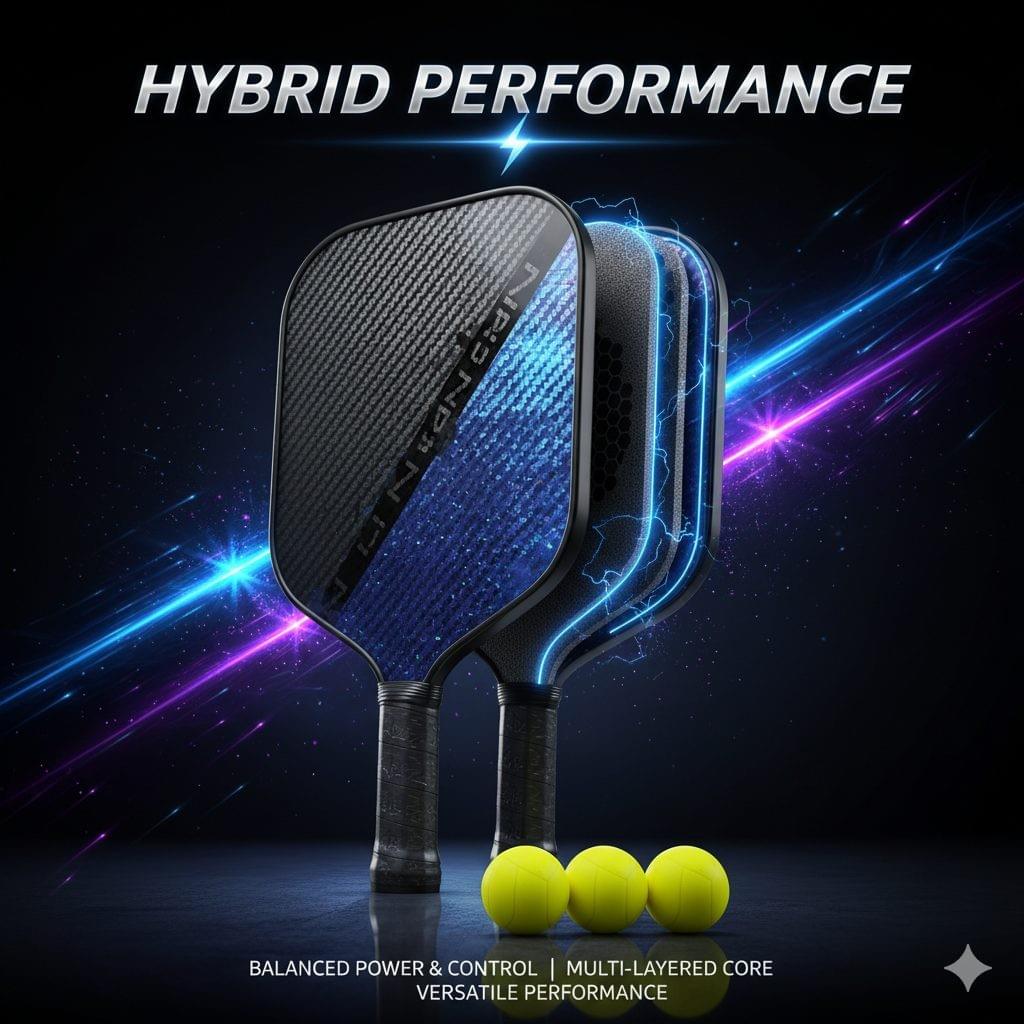
A growing share of our OEM orders use hybrid construction — carbon and fiberglass combined, either as blended weaves or as layered plies. The idea is simple: fiberglass contributes pop and forgiveness, carbon contributes spin texture and a stable feel. A well-tuned hybrid generally:
- Sits between pure fiberglass and pure carbon on both power and spin.
- Lets a brand tell a "best of both" story at a mid-range price.
- Adds complexity in lamination, so it needs a factory that controls press schedules tightly — a sloppy hybrid is worse than a clean single-material build.
From the Manufacturer's Perspective
Face material affects more than play — it affects your production plan:
- Lead time. Carbon prepreg and quality glass cloth are both widely available, but carbon supply in peak season runs tighter; booking early matters for Q4 launches.
- Cosmetic yield. Raw carbon shows weave irregularities and pressing flaws. Fiberglass hides under resin and paint. Expect slightly stricter cosmetic QC (and slightly higher scrap allowance) on raw carbon lines.
- Consistency. The same T700 cloth pressed by two factories can play differently. When comparing suppliers, ask for paddles from the same production batch, not showroom samples.
How to Decide: A Simple Framework
- Define the player first. Spin-and-control oriented intermediate/advanced → carbon. Beginner, power-oriented or price-driven → fiberglass.
- Define the retail price band. Above roughly $120 retail, buyers expect raw carbon or better. Below $80, fiberglass (or hybrid) keeps margins healthy.
- Plan the line, not the paddle. A common structure: fiberglass or hybrid entry model + T700 raw carbon flagship. This covers the market without doubling your SKU count.
- Test both with your own hands. Spec sheets decide the sourcing direction, but the final call should come from court time with production samples.
- Confirm the details in writing. Surface treatment, face cloth weight (e.g., 3K vs plain weave), core thickness and total weight tolerance all move the playing character. Put them in the spec sheet before the deposit.
How TPU SPORTS Can Help
TPU SPORTS manufactures both surfaces in-house:
- T700 raw carbon fiber paddles in 13mm / 14mm / 16mm cores, with thermoformed one-piece options
- Fiberglass and fiberglass-composite series tuned for pop and entry-to-mid price points
- Hybrid carbon + fiberglass builds with layered or blended construction
- OEM/ODM service: custom shapes, weights, edge guards, grip brands, packaging and artwork
- Sample runs before bulk orders, so you can feel the difference before committing
If you are choosing between the two materials for your own line, send us your target player and price point — we will recommend a build and quote both options side by side.
Contact TPU SPORTS for a quote or sample request →
FAQ
Q1: Is T700 carbon fiber better than fiberglass for spin?Generally yes. Raw T700's unfinished texture creates more friction against the ball than a smooth fiberglass resin surface. Fiberglass paddles can still generate spin, but they start from a smoother baseline.
Q2: Are fiberglass pickleball paddles good for beginners?They are a common and sensible choice for beginners: strong pop makes the ball easy to move, the broad sweet spot is forgiving, and the price is friendly. A beginner who develops toward spin-and-control play will eventually want to try a carbon face.
Q3: Why is raw carbon more expensive?The cloth itself costs more, and raw finishes demand stricter cosmetic and process control, since there is no paint layer to hide flaws. The premium reflects both material and manufacturing discipline.
Q4: Does the raw carbon texture wear off?It gradually smooths with heavy play, like any surface. Unlike spray-on grit that can flake off in sheets, raw carbon's texture is part of the cured resin, so it wears evenly and more slowly.
Q5: Can I get a paddle with carbon on one side and fiberglass on the other?Yes — hybrid and dual-face builds are a standard OEM request. They add lamination complexity, so they are best placed with factories that run tight press control.
Q6: Which surface is more durable?Both last years in normal play. Carbon has higher tensile strength; fiberglass handles impact and flex well. Construction quality (edge bond, core, handle) predicts lifespan better than the face cloth does.
Q7: Are carbon and fiberglass paddles both USA Pickleball approved?Both can be. Approval applies to the finished paddle specification, not the material. Confirm the certification status of the exact model and revision you are ordering.