
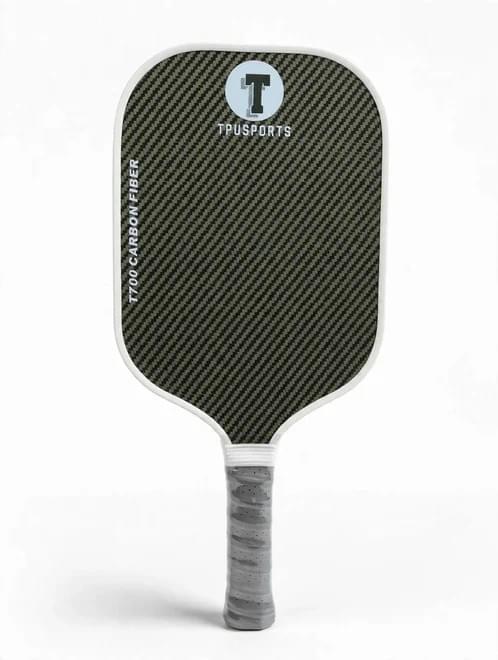
For years, the first question a buyer asked about a paddle was about the face: T300 or T700 carbon? That was the wrong place to look. The face sells the first order. The core decides whether the paddle still plays the same way three months later — and whether your customer comes back for another one or sends it back. In 2026, the core is the product, and the brands that understood that first are the ones setting the prices.
If you have not chosen a face yet, our T700 vs. T300 guide compares the two carbons. This post is about what sits behind the face.
The honeycomb problem
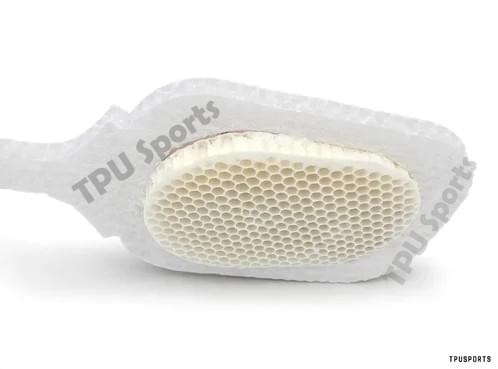
Most paddles are still built on a polypropylene honeycomb core: a sheet of hollow cells. It is light, cheap, and easy to make — and it has a built-in expiry date. Every hard hit compresses the cells under the contact point. Over weeks of play the cells crush, the sweet spot shrinks, the pop fades, and the paddle goes dead in the middle. Players call it core crush. For a brand, it shows up as something worse: returns, complaints, and reviews that say the paddle 'lost its power.' The core is the part your customer feels every time they hit the ball, and it is the part most factories still treat as an afterthought.
Four foam-core routes, one target
In 2026, four brands put the core on the box. They took different routes, but all four are answering the same complaint: no hollow cells to crush.
| Brand / Model | Core construction | Position | Retail |
|---|---|---|---|
| Selkirk Boomstik | BoomCore: PureFoam + EVA Power Ring | Ultimate power | $333 original; Boomstik ST $350, launched Nov 10, 2026 |
| LUZZ Pro 4 Inferno | MPP microporous foam core | Balanced / all-court | $189 US, 16 mm, T700 face |
| CRBN TruFoam | TruFoam solid foam | Power + feel | Solid foam, consistent feel |
| Diadem Warrior BluCore | BluCore triple foam | Comfort / control | Triple foam, long-term consistency |
Prices above are US retail positions at the time of writing, not TPU Sports quotations. No competitor performance figures are quoted here — only their stated construction. The lesson for a buyer is not which of the four to copy. It is that the market has already moved: a solid or micro-cell core is now the price of entry for a premium paddle, and every one of these brands sells the core under its own name. Nobody is selling 'EPP' or 'MPP' on the box. They are selling a technology.
The TPU Sports Core Family: one factory, four cores
We build paddles the same way — four cores, four jobs, each with its own name. Buy the technology, not the material.
| Core name | Construction | Job | Use |
|---|---|---|---|
| HexCore | PP honeycomb | Entry | Price-led lines, first orders, clubs |
| PowerCore | Premium EPP power core | Power | Aggressive, power-first players |
| MicroCore | Microporous polymer core (MPP) | Control | All-court and control lines |
| EliteFoam | Solid foam core | Elite | Future flagship — in development |
PowerCore: the power core
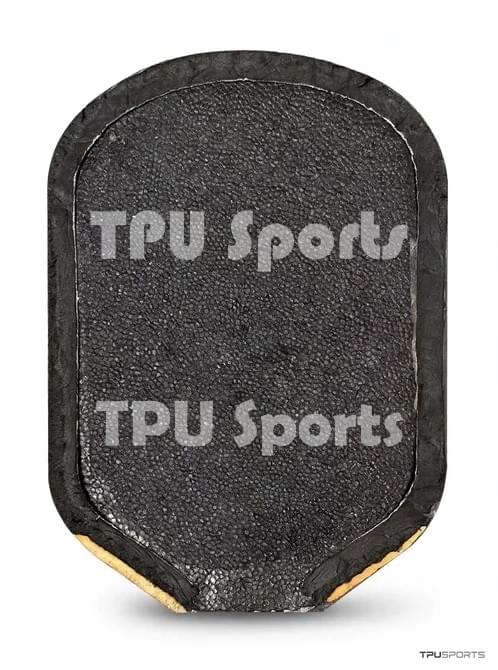
PowerCore is our answer to the power question: a 100% solid, closed-cell EPP block with heavy-duty perimeter reinforcement, wrapped in an integrated EVA Power Ring that locks in energy on impact. There are no hollow cells to crush, so the pop stays consistent — the sweet spot does not shrink as the paddle ages. It sits on a T700 raw carbon face (tensile strength 4,900 MPa) in a thermoformed unibody, and it is built for aggressive, power-first players who hit through the ball. The benchmark for power paddles in 2026 sits at $333 to $350 retail (Selkirk's Boomstik, and the new Boomstik ST, launched November 10, 2026). PowerCore puts your brand in that same power category — as an OEM platform at your own price point, under your own name. MOQ starts at 50 paddles, so a power line does not need a container-load commitment to test.
MicroCore: the control core
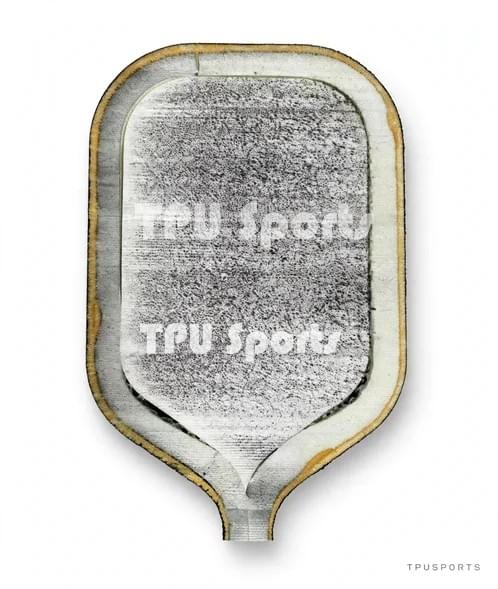
MicroCore is the other half of the family: a microporous polymer (MPP) core — a micro-cell structure running through the whole core, not a hollow sheet. The dense micro-cells damp vibration and keep power and precision stable across the face, which is what control and all-court players feel as a bigger, more forgiving sweet spot. If PowerCore is the paddle for players who hit through the ball, MicroCore is the paddle for players who place it. The MPP route is proven in the market — LUZZ built its Pro 4 line on it — and MicroCore is our own version of that technology, built for brands that want control without giving up the solid-core feel.
Which core for your line?
Price-led, or a first order? HexCore — reliable, lightweight, affordable. It is the honest entry core, and it is where most lines should start if the retail price is the deciding factor. Power-first players? PowerCore — the explosive pop, the consistent sweet spot, the T700 face. Control and all-court? MicroCore — stability, damping, precision. Flagship later? EliteFoam — our solid-foam elite core, in development. Talk to us early if you want it on your roadmap. You do not need four paddles to test the idea. Start with one core on your best-selling shape and let your players compare it with what they have now.
Three questions to ask any paddle factory
1. Is the core solid or hollow — and what happens to the sweet spot after six months of hard play? 2. Can I test the core on my own shape and layup, not just on your house model? 3. Is the certification per model? It should be. USA Pickleball certification is granted per model, not per factory — any factory that claims blanket approval is overselling. We build to USA Pickleball technical standards, and we can provide samples and test data for your model's submission.
Request samples
Request PowerCore and MicroCore samples. Tell us your target retail price and your first order quantity — MOQ starts at 50 paddles — and we will quote a sample order so your team can test the feel before committing to a run.