Quick Answer
To choose your pickleball paddle:
(1) match the paddle to your current skill level — not the level you want to be;
(2) pick one priority — power, control, or all-court balance;
(3) lock the specs that follow from those two answers: weight, core thickness and face material;
(4) stay inside a realistic budget and test before you commit.
The six player-profile cheat sheet in Step 7 turns this into a one-glance decision.
There is a companion guide on our blog that explains what each specification actually means — weight classes, core materials, face materials. This article is the next step: turning those specs into a personal decision. Read them together and you cover both sides of the question.
Step 1: Be Honest About Your Skill Level
The fastest way to waste money on a paddle is to buy for the player you want to be in a year instead of the player on the court today. Advanced paddles are not "better" — they are more demanding: smaller effective sweet spots, stiffer responses, and less forgiveness on mishits.
| Skill level | Typical DUPR | What the paddle should do |
|---|---|---|
| Beginner | 2.0 – 3.5 | Enlarge your margin for error: big sweet spot, forgiving response, comfortable grip |
| Intermediate | 3.5 – 4.2 | Support shot variety: balanced power and control, medium weight, 14mm-class core |
| Advanced | 4.2+ | Reward precision: specific power or control bias, tuned swing weight, premium face material |
DUPR numbers vary between platforms and regions — treat them as a compass, not a law.
Step 2: Pick One Priority
Most players say they want everything. Paddles are built around trade-offs, so the useful question is: what single improvement would most change your game right now?
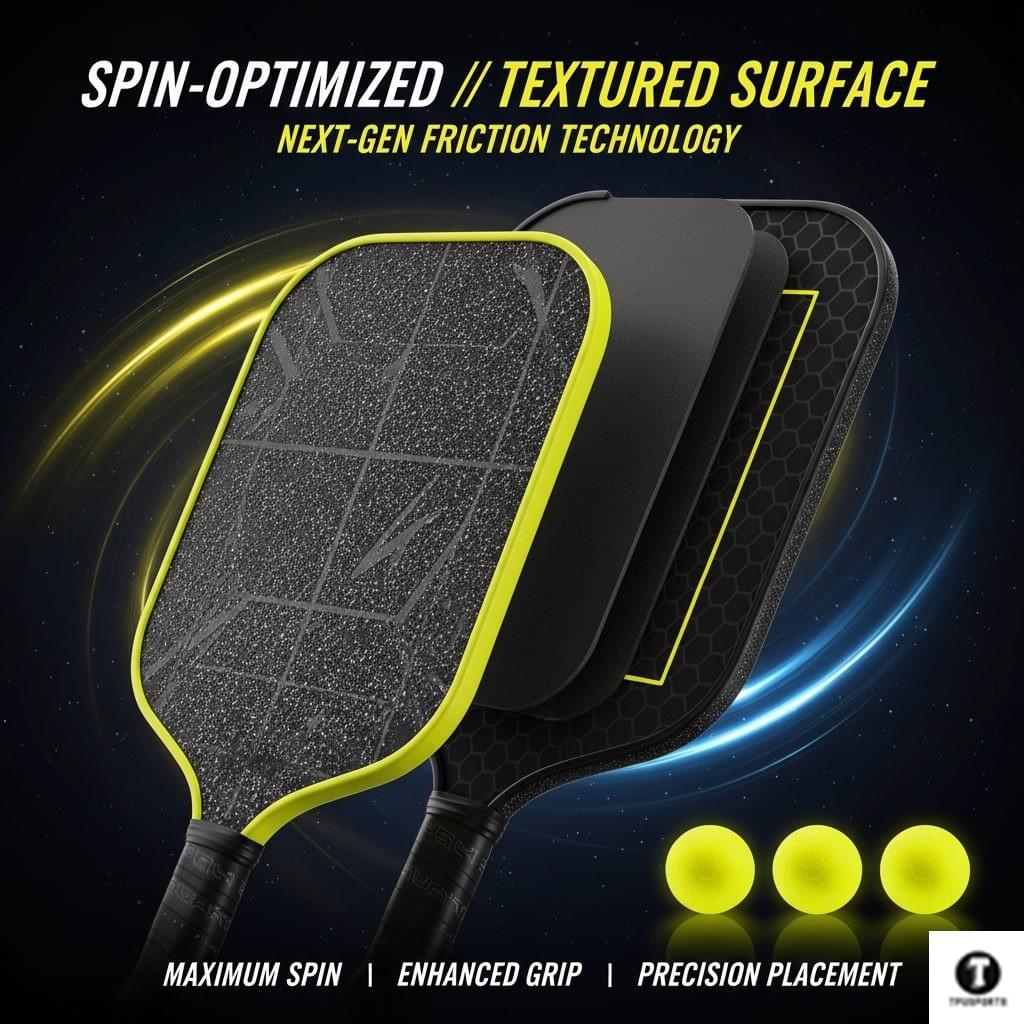
If you cannot pick one priority, that itself is information: you are probably an all-court player, and the "balanced" column is your friend.
Step 3: Weight — The Spec That Runs the Whole Game
Weight influences power, hand speed and fatigue more than any other single number. Most performance paddles sit between 7.0 and 8.5 oz.
Two practical rules: choose the heaviest paddle you can swing comfortably for two hours, not ten minutes; and remember that static weight is only half the story — swing weight (how heavy the paddle feels in motion) determines what you actually feel. If a brand publishes swing weight, use it.
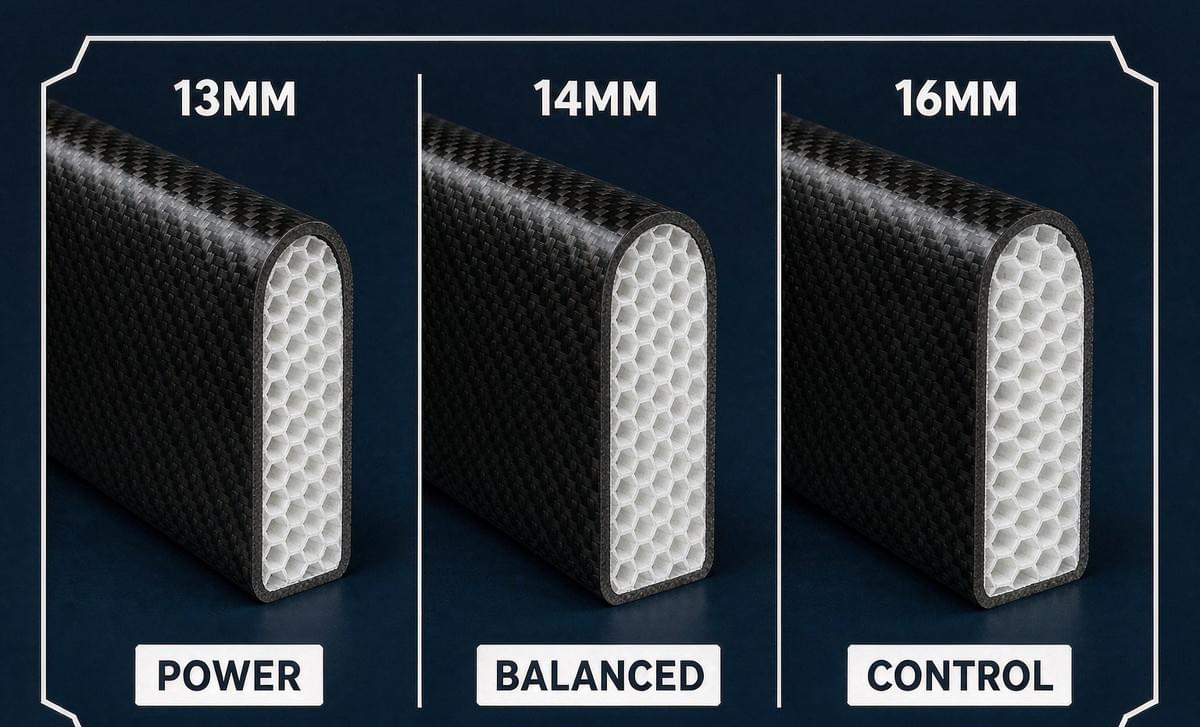
Step 4: Core Thickness — Power vs Control in One Number
We cover this dimension in depth in our 13mm vs 14mm vs 16mm guide, including the weight-tolerance interactions that matter when you are ordering at scale.
Step 5: Face Material — The Personality Layer
The face is what touches the ball, and it sets the paddle's playing personality:
A detailed comparison of the two most common options — T700 raw carbon vs fiberglass — is on our blog; the short version is: spin and touch lean carbon, easy pop leans fiberglass.
Step 6: Shape, Handle and Grip
- Standard / widebody: wider face, larger sweet spot, more forgiving. The right default for beginners and doubles players.
- Elongated: longer reach and more leverage on serves, smaller sweet spot. Suits aggressive baseliners and former tennis players.
- Hybrid shapes: partway between; popular in modern pro shapes.
Handle and grip matter more than most buyers expect: a grip that is too small forces forearm tension; too large and wrist snap suffers. A quick rule — when you hold the paddle, your fingers should wrap around without digging into your palm. Players with two-handed backhands generally prefer longer handles (5.5"+).
Step 7: Budget and the Player-Profile Cheat Sheet
Price bands tell you roughly what construction to expect:
| Band | What you typically get |
|---|---|
| $40 – 90 | Fiberglass or composite faces, standard polymer cores; solid learning tools |
| $90 – 150 | Raw carbon or hybrid faces, 14–16mm cores, better QC and consistency |
| $150 – 250+ | Premium carbon (raw T700-class), thermoformed or foam-injected construction, tournament-level tuning |
And now the cheat sheet — six common player profiles, matched to a spec combination:
Profiles are starting points, not verdicts. Two adjustments matter more than any table: test with real balls on a real court before buying, and re-evaluate after a month — your game will have moved.
Five Mistakes That Waste Money
- Buying for the future self. An advanced paddle in a beginner's hand usually plays worse than a beginner paddle. Upgrade when your game asks for it, not before.
- Obsessing over one spec. Weight, core, face and shape interact. A "16mm control paddle" that weighs 8.4 oz plays nothing like a 7.6 oz one.
- Copying a pro's paddle. Pro paddles are often customized builds that don't match the retail spec sheet anyway.
- Ignoring grip size and total feel. The best-constructed paddle is wrong for you if your hand fights it.
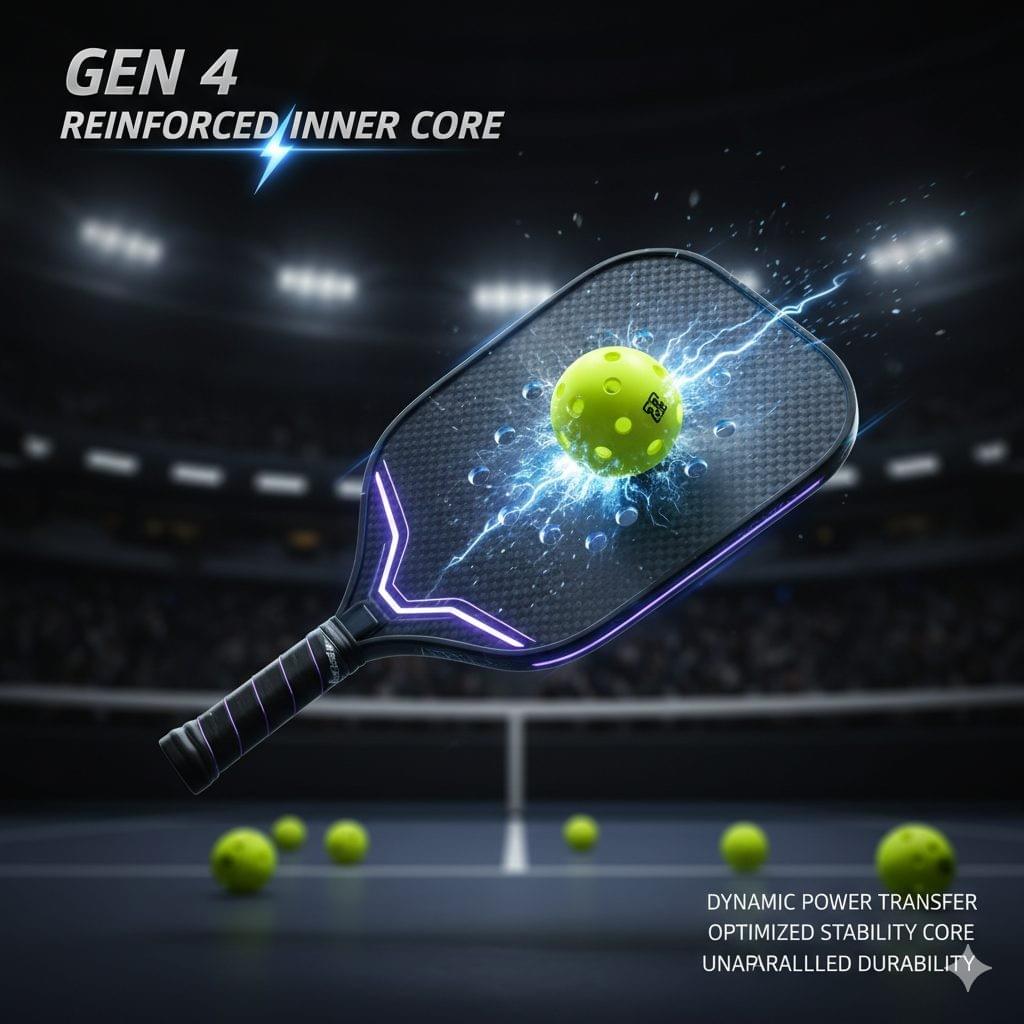
- Trusting marketing nouns over measured data. "Gen 4," "foam injected," "T700" — these describe ingredients, not performance. If a brand or reviewer publishes swing weight, twist weight and spin RPM, weight that data far above adjectives.
A Note for Brand Owners Reading This
Everything above applies to your customers, too. If you are building a paddle line rather than buying a paddle, the same matching logic runs your SKU plan: a forgiving widebody fiberglass model for the Newcomers, a raw-carbon elongated for the Tennis Converts, a 16mm control build for the Kitchen Rats. Three to five profiles covered well beats ten SKUs covered vaguely.
We covered how buyers choose in our original guide to choosing the right pickleball paddle — this article is the framework we use in OEM consultations when a brand asks "which models should our line include?"
How TPU SPORTS Can Help
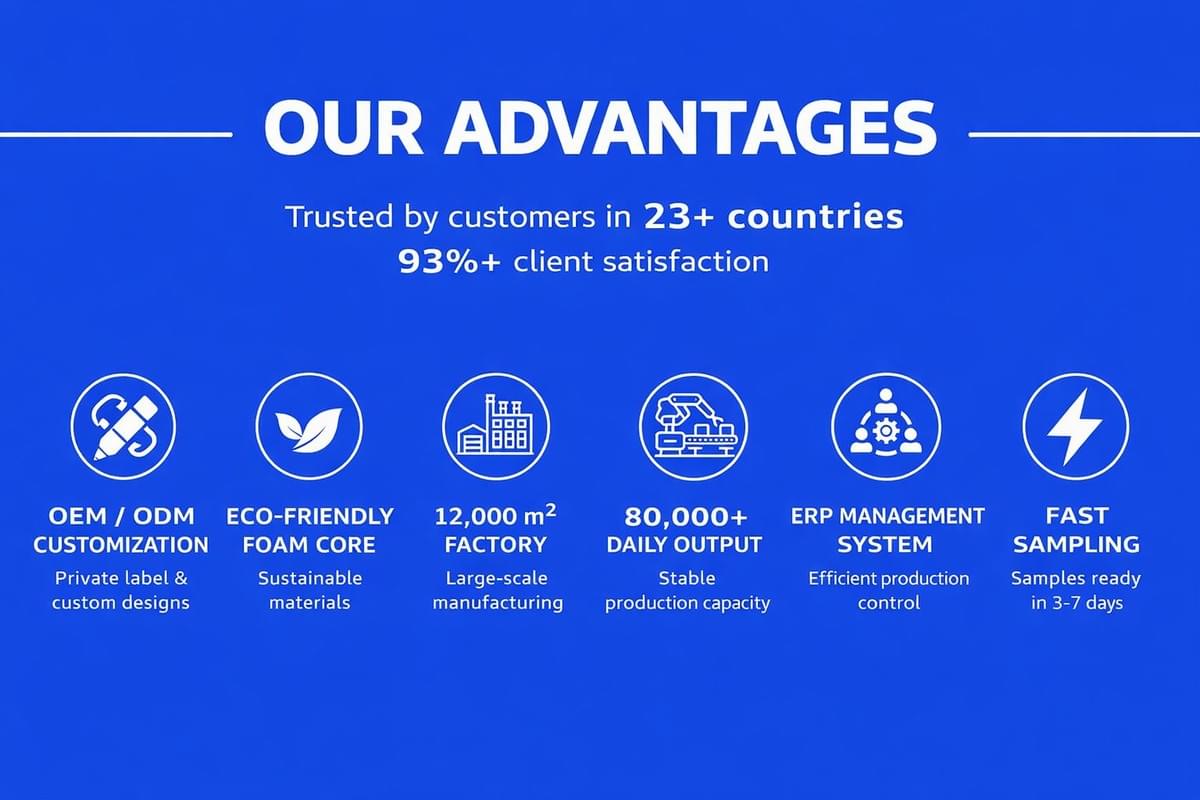
TPU SPORTS is a pickleball paddle manufacturer with 10+ years of carbon fiber production experience, 200,000+ units shipped and a 93% partner retention rate. In-house capabilities cover the whole matching table above:
- Faces: T700 raw carbon, fiberglass, Kevlar / aramid, hybrid carbon-fiberglass builds
- Cores: PP honeycomb in 13mm / 14mm / 16mm, plus EPP and foam-injected constructions
- Shapes: standard, hybrid and elongated, with 100+ existing molds
- QC: 14-point testing (swing weight, twist weight, sweet spot accuracy) with Schneider equipment
- Service: OEM/ODM, low MOQs (50 / 100 / 500 pcs), USAPA-aligned builds, sample runs before bulk
Whether you are a player picking one paddle or a brand planning a line, the framework is the same — match the build to the player. Send us your target profile and we will spec the paddle →
FAQ
Q1: What paddle should a complete beginner buy?A midweight (7.6–7.9 oz) widebody with a 16mm core and a fiberglass or composite face. It maximizes forgiveness while you build strokes, and it does not require a premium budget.
Q2: Is a heavier or lighter paddle better?Neither is "better" — they trade power against hand speed and fatigue. Most players do best in the 7.6–8.2 oz midweight zone. Pick the heaviest paddle you can swing comfortably for two full hours.
Q3: How do I know my grip size?Measure the distance from the middle crease of your palm to the tip of your ring finger — the result in inches approximates your grip circumference. Or use the finger test: gripping the paddle, your fingers should close without digging into the palm.
Q4: Does core thickness really matter?Yes, and noticeably. 13mm plays more direct and power-biased; 16mm plays softer with more dwell and damping; 14mm is the balanced middle. Our thickness guide covers the details.
Q5: Are expensive paddles worth it?Above roughly $150 you are paying for premium face materials, tighter manufacturing tolerances and construction technology (thermoforming, foam injection). For committed intermediate-plus players, yes. For casual play, a well-built $80–100 paddle covers most needs.
Q6: Should I copy the paddle a pro uses?As inspiration, fine. As a purchase decision, no — pro paddles are frequently custom-tuned builds, and the retail version may differ in weight, swing weight and even construction.
Q7: How long does a pickleball paddle last?For regular players, expect visible surface smoothing and some pop loss within 6–18 months of hard play; construction (edge bond, core, handle) usually determines true lifespan more than the face material does. Replace when performance clearly drops or cracks appear.
Q8: Where can I get a paddle built to a specific player profile?That is literally the OEM conversation. TPU SPORTS builds custom paddles around weight, thickness, face and shape targets with low MOQs and sample runs — bring us the profile, and we will bring the spec sheet.